15-KENTUCKY
15-KENTUCKY
Kentucky is a one of the most beautiful and fun states that I have visited with my husband, Joe and baby-to-be, Jenn. The state is an interesting mix of farmlands, bluegrass, rolling hills, and mountainous areas. As a horse-lover from birth, I was amazed at the beautiful pastures and barns that I saw.
The mountainous areas, near Ohio, also fulfilled my need for spelunking – cave exploration. It’s OK if you think I’m a little batty! Yeah!
Unfortunately, if you’re a dinosaur-lover, Kentucky is not he place for you. Kentucky was underwater during most of the Paleozoic Period (538-251million years ago). Sediment deposits from the Triassic, Jurassic and Cretaceous Periods just don’t exist here. All evidence of dinosaurs and their fossil history are missing.
That doesn’t mean that you should take the state off your travel list though. There are some fun and interesting places to visit while you are here.
KENTUCKY HORSE PARK AND CAMPGROUNDS
4089 Iron Works Pike, Lexington, KY 40511 (859) 259-4257. (800-678-8813).
The Park showcases all breeds of horse through daily equine demonstrations, three outstanding museums, horse-drawn tours, carriage rides, an art gallery, horseback riding, pony rides, and special exhibitions (check their calendar). The park also hosts the most complete schedule of equestrian events in the country. Horse lovers from around the country visit the Park to see steeplechase, cross country competitions, specialized breed shows, carriage driving, polo, and the only four-star equestrian event in North America, the Land Rover Kentucky Three-Day Event. I loved every moment there! My daughter, Jenn, also turned out to be a horse lover and enjoyed horseback riding, show jumping and trail riding. There are great campgrounds, and it is pet friendly!
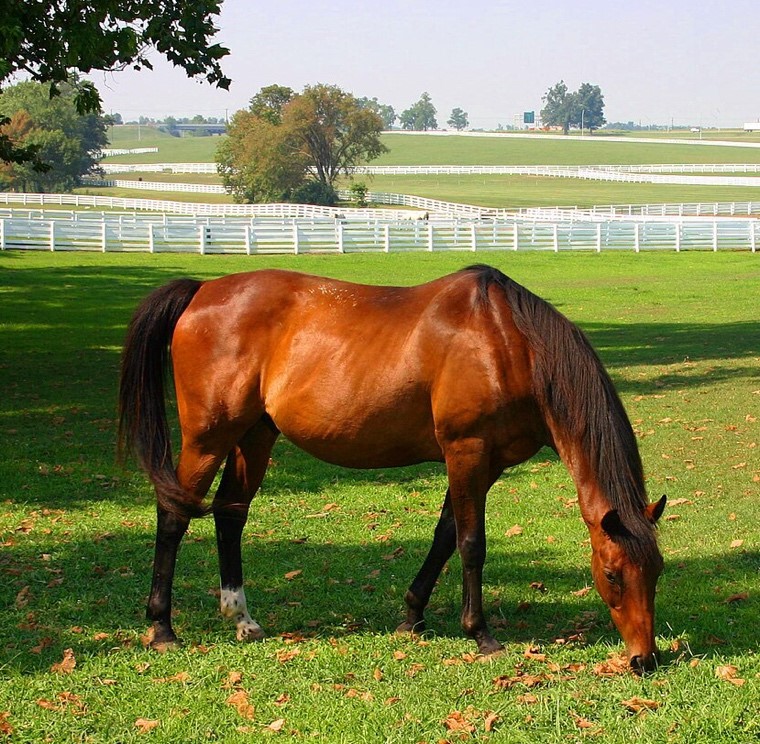
Kentucky Horse Park Photo
Now that I have gotten my horse-loving obsession out of the way, another great place to visit is Mammoth Cave National Park.
MAMMOTH CAVE NATIONAL PARK
P.O. Box 7, Mammoth Cave, KY 42259-0007 (270) 758-2180
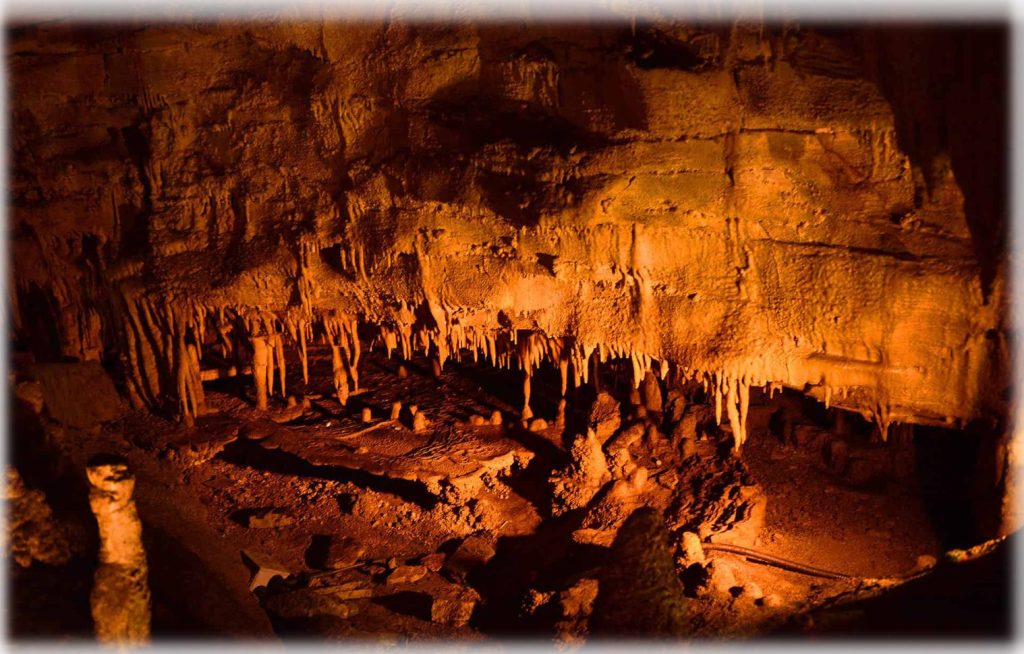
Mammoth Cave National Park is home to thousands of years of human history with a rich diversity of plant and animal life, earning it the title of UNESCO World Heritage Site and International Biosphere Region. To my family, it is a WOW site. A must see it to believe it!
We all know there are caves all around the world, but none can compare to Mammoth Cave! It is the world’s longest-known cave system with over 400 known miles of passageways. Archeologists feel that there could still be 200 miles passageways yet to be discovered. This natural wonder and World Heritage Site should be on everyone’s list of must-have experiences. Mammoth Cave National Park is just 30 minutes from Bowling Green, Kentucky.
There are more places to visit in our Bluegrass State. While no dinosaur bones have ever been found here, many Ice Age Mammal bones have been discovered over the past two hundred years. Read on!
BIG BONE LICK STATE HISTORIC PARK
3380 Beaver Rd, Union, KY 41091 (859) 384-3522. Greta.gay@ky.gov
Forget lions and tigers and bears. Mastodons, mammoths, and giant ground sloths are just a few the most familiar fossil mammals found here in northern Kentucky.
Some of the first scientifically studied fossils of these Ice Age mammals came from a salt spring just east of the Ohio River in northern Kentucky. It’s about a half-hour drive southwest of Cincinnati Ohio. Here, for tens of thousands of years, salt has been dissolved from ancient buried marine bedrock and brought to the surface by groundwater, forming a natural salt lick. Large animals of that period would come to these mineral-rich springs to drink the water and get the salt and other minerals that they need. The word “lick” is the name given to places where mammals go to get their need of salt.
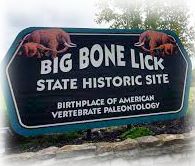
(copyright Deborah Balke Lindner)
Over time, many of these huge animals became trapped and perished in the muddy, soft ground around these springs. Lucky for us, this rich muddy ground was perfect for preserving their bones. The Bone Lick Mineral Springs gave us some of the richest remains of Ice Age mammals found anywhere on earth! Animals including bison
The bones of many prehistoric mammals, including mammoths, mastodons, ground sloths, bison, caribou, musk ox, peccary, wolves, black bears, saber-toothed cats, stag-moose, a forerunner of the modern-day horse and a possible tapir have all been found here. Over two thousand bones have been collected, inspiring the name “Big Bone Lick”.
The Indians that lived there called the spot, “The Place of Big Bones”. The bones were all over the place and easy to get to. In 1739, Captain Charles Le Moyne de Longueuil from France wandered upon the site and found many fossils. He sent the fossils he recovered to the King of France who donated them to the natural history museum in the Jardin des Plantes.
Other fossil bones were sent to Bengamin Franklin, which he correctly identified as elephant bones, or an animal close to it. But he didn’t understand what he was looking at. There were no elephants ever found in America. Turns out that he was looking at the fossil bones of the elephant-like mastodon. Its teeth are much different though, that’s why they knew that they were looking at a different mammal. Smart guy.
Thomas Jefferson was also very interested in these fossils. He called for explorer William Clark, of the famous Lewis and Clark expedition, to collect more fossils and send them back the White House right away! Over 200 bones were sent to the White House!
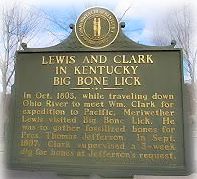
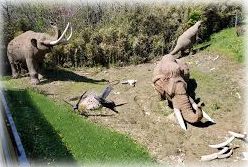
(copyright Deborah Balke Lindner)
Back then, paleontology was not listed under scientific studies. This field only began to develop around 1800, something that the fossils at Bone Lick helped to inspire. This is where the science of paleontology evolved!
At the park you can visit the Bison herd, tour the Museum and Diorama pit, go hiking and discover salt springs along the Big Bone Creek trail, camp overnight, go birdwatching, play tennis or mini golf and have a picnic while the younger kids play in the playground. The grab a been there done that t-shirt! Just have fun.
BLUE LICKS BATTLEFIELD STATE PARK
10299 Maysville Road, Carlisle, KY 40311. (859) 289-5507 melinda.lightnerAky.gov
The salt springs here are like those at Big Bone Lick State Historic Park. Over time, the springs I have attracted Ice Age mammals, modern day Indians and even frontiersman Daniel Boone! The bones of the Ice Age mammals are on display here in their museum. The park encompasses 148 acres, with many different hiking trails. There is also a monument commemorating the August 19, 1782 Battle of Blue Licks. The battle has been designated as the final battle of the American Revolutionary War. I have not visited this state park. I hear that it is much smaller than Big Bone Lick State Historic Park.