Nebraska is the 37th state admitted to the U.S. in 1867, just two years after the Civil War ended. It is a flat, land-locked state that is midway between the Atlantic and the Pacific Oceans. Although it’s known as a dry, plains state, Nebraska has more miles of rivers than the other 49!
Since there were few trees in this state, early settlers had to build houses made from sod that they cut into bricks. In 1872, publisher J. Sterling Morton asked the new state’s leaders to set aside a day for tree planting. These trees would help to protect the dry soil from being blown away. People all over America, then and now, plant trees on Arbor Day. This is celebrated on the last Friday in April.
I have never visited the state, but my husband, Joe, was stationed there for TDY in the Air Force. For the most part, he stayed on the base and did not go anywhere to look for dinosaurs or fossils. That would be left up to me- his future wife!!
Although the Corn Husker State is located right next to other states that are loaded with dinosaur fossils, no dinosaur skeletons or fossil bones have been found here. In 2002, trace fossils of 20 dinosaur footprints were found. They were about the size of dinner plates and were made by a tridactyl ornithopod that lived about 66 million years ago. These were medium-sized, plant eaters that lived at the end of the Cretaceous Period. Their “bird-like” feet had three toes. Scientists say that they walked on their rear legs and had long tails that they used for balance.
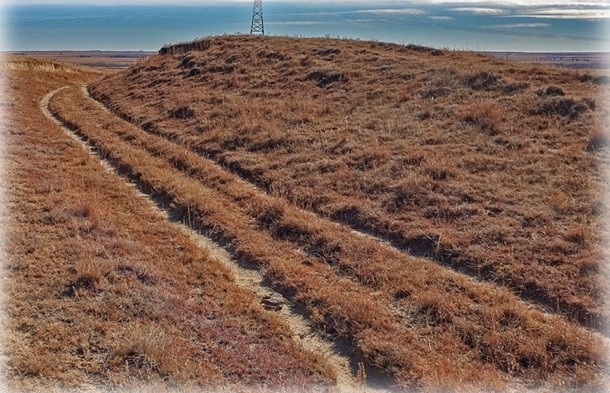
Another type of American-made “fossil” found in Nebraska were the ruts made by the wagon wheels of early pioneers. These ridges made in the mud, have been preserved for about 180 years! Starting in the 1830’s, Nebraska became the first major challenge to wagon trains heading west along the famous Oregon Trail. They had to worry about steep ascents and descents, many river crossings, and extreme weather. It tested emigrants with a little bit of everything. Today, many of the Oregon Trail’s original landmarks remain not just in Nebraska, but across its entire route to Oregon. “Westward Ho.”
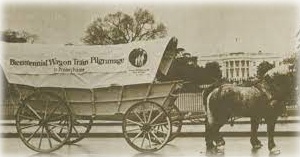
(Note: while I was a member of the Bicentennial Wagon Train, we had two Belgian Draft horses that pulled a real Conestoga Wagon. We were up every day at about 4am to feed, water and groom Budd and Stan. They were beautiful 2,000-pound draft horses. Noble yet sweet. After taking care of our horse team, we checked our equipment and then we had a simple breakfast. Boy, did we have it easy. Police escorted the long train of wagons, members riding their horses, and members that walked rather than riding in the wagons. We wanted to make it easier for the horses. I have the deepest respect for the pioneers that battled the weather, rode over rocky paths, and ate whatever they could find or hunt. But I’m sure the pioneers and my wagon train members would all agree that sleeping under the stars, thinking about what the next day might bring, filled us all with wonder. Along the Oregon Trail in the State of Nebraska (copyright Matt Gove)
LET’S TALK ABOUT THE FOSSILS FOUND IN NEBRASKA!
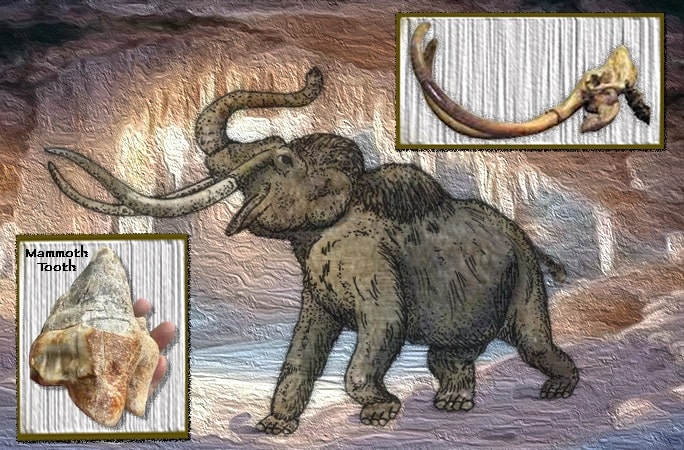
There are plenty of other mammal fossils that have been found all over Nebraska. As a matter of fact, Nebraska’s Official State Fossil is the mammoth. While the remains of all three species of mammoths have been discovered here, the Columbian Mammoth, the Imperial Mammoth and the Woolly Mammoth, the state chose to honor them all under the term mammoth.
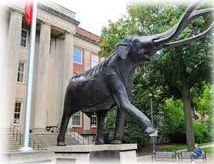
The largest Columbian Mammoth ever found, nicknamed “Archie” has his bones on display at the University of Nebraska State Museum.
(Copyright Deborah Balke Lindner)
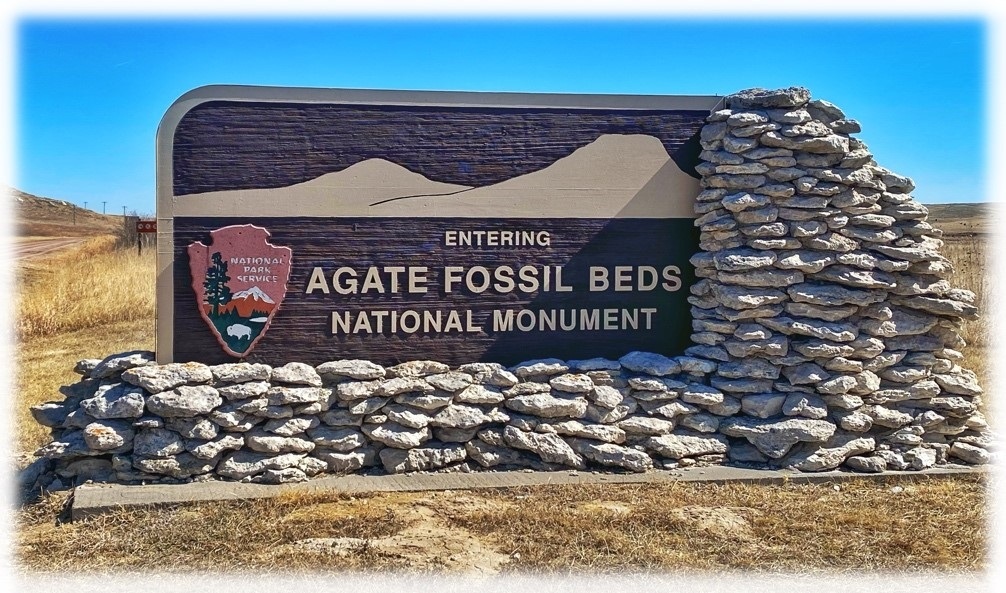
AGATE FOSSIL BEDS NATIONAL MONUMENT
301 River Road, Harrison, Nebraska 69346. (308) 668-2211. www.nps.go/agfo
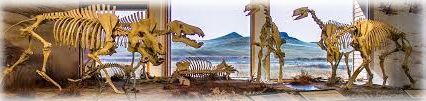
This wonderful and internationally known fossil site near Harrison, Nebraska was once a huge cattle ranch owned by Captain James Cook in 1892. While Cook’s cattle ranch was very productive, it turns out that Agate Springs Ranch would become even more productive in terms of Miocene fossils. These fossil specimens can be seen in museums around the world.
History tells us that some sort of disaster happened here about 20 million years ago. Many thousands of animals were trapped and killed by a large flood or some other disaster. They were covered by mud and turned to fossils over millions of years. This is still an active fossil quarry, and you may see some paleontologists working as you hike the 2-mile trail. This trail leads to Carnegie Hill and University Hill. Fossils of the horse-like Moropus, rhino-like Menoceras, the gazelle-like camel Stenomylus, and the ancient beaver Palaeocastor.
Agate Fossil Beds National Monument (Photo: National Park Service)
ASHFALL FOSSIL BEDS STATE HISTORICAL PARK
PO Box 66, Royal, Nebraska 68773. (402 )893-2000 www.ngpc.state.ne.us/parks/ashfall.html
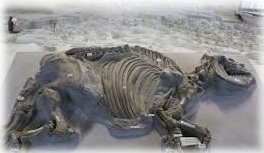
A large volcano in Idaho erupted about 12 million years ago and left at least a foot of volcanic ash spread all over what is now known as Ashfall Fossil Beds State Historical Park. Herds of prehistoric mammals including rhinoceros, camels and the three-toes horses from the Cenozoic Period were probably drinking at a watering hole when a choking ash-cloud hurled toward them. They didn’t have time to run. The ash buried them exactly as they fell, preserving their skeletons forever. This park opened in 1991 and is still being excavated. You can watch paleontologists at work and speak to them at the site. This is a huge 360-acre park with interpretive displays, working paleontologists, a fossil preparation lab and a visitor’s center.
Ashfall Fossil Beds State Historical Park -Thanks to Visit Nebraska
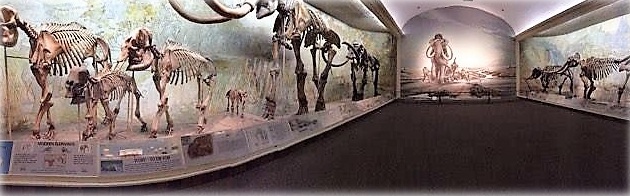
Their “Elephant Hall” is their biggest attraction. They have over one million fossil specimens here that come from all over Nebraska. Check out the world’s largest mounted mammoth, named “Archie” in Morrill Hall. There is also a ten-foot statue of him in front of Morrill Hall. The museum also has the Marx Science Discovery Center, the Mueller Planetarium, many paleontology and dinosaur exhibits, wildlife dioramas, a large mineral collection and exhibits on the state’s history and culture.
Morrill Hall’s “Elephant Hall” and Archie the Mammoth
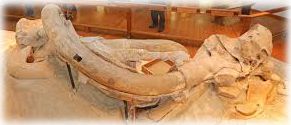
Fighting To Their Death – Trailside Museum of Natural History
TRAILSIDE MUSEUM OF NATURAL HISTORY
Located on US Route 20, Crawford, Nebraska 69339. (308) 665-2929
The Trailside Museum of Natural History is in the historic Army Theater at Fort Robinson State Park. The building was acquired by the University in 1955 which opened the Trailside Museum at Fort Robinson in 1961. It was listed on the National Register of Historic Places in 1988.
This museum has a truly unique exhibit. Two Columbian mammoths that were dueling for mating rights had their tusks locked together permanently! This caused them to fall as they tried to untangle themselves. They died in the exact position where they stood. The mammoths that have been intertwined for eternity were discovered 13 miles from where the Trailside Museum stands. The museum also has many other prehistoric animals including the three-toed horses, daeodonts, ancient rhinos, and giant tortoises.
TOADSTOOL GEOLOGIC PARK
USFS Main Office – 125 N Main St., Chadron (308) 432-0300
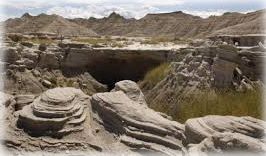
Toadstool Park is the “Badlands of Nebraska”. The rock formations found in this park formed 38-24 million years ago and are related to the same rocks found in South Dakota’s Badlands . There are many fossil deposits that are contained in the sediments that comprise these landscapes. They are the object of ongoing research projects by Chadron State College scientists in cooperation with theU.S. Forest Service. You can look, touch and photograph the fossils. It is illegal to take anything! There are three hiking trails with varying degrees of difficulty. Many people love to camp there and bring their telescopes to see the milky Way from the Badlands of Nebraska. Leashed pets are welcome!
Toadstool Geologic Park
Just What You Would Expect To Find In The Corn-Husker State!
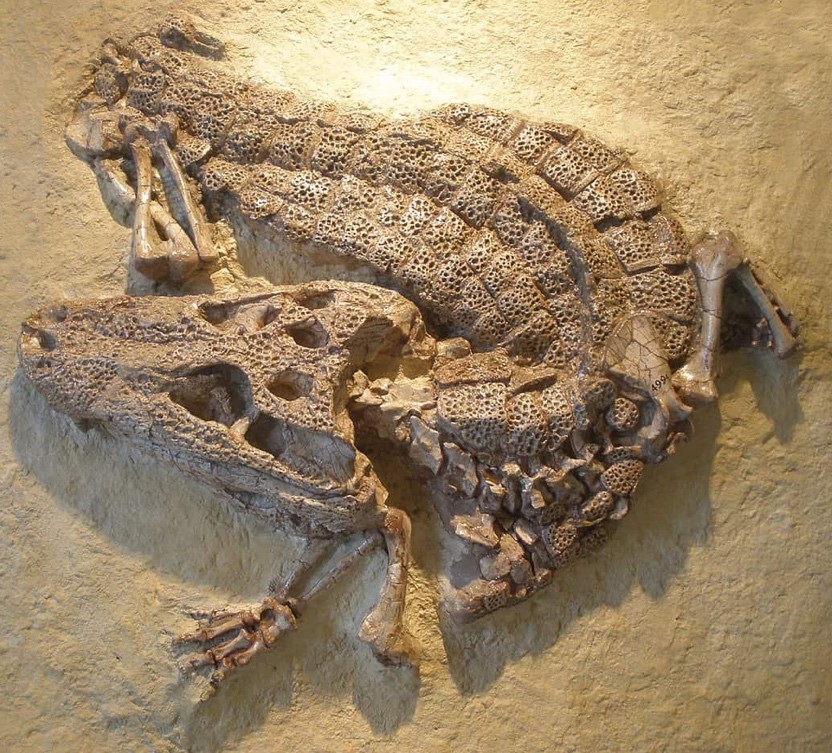
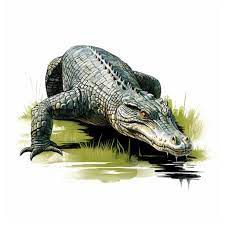
An alligator, right. Yeah, in the middle of the corn fields, right? NOT. The oldest alligator fossil ever found were uncovered in the Chadron Formation in northwestern Nebraska, in 2015. The Chadron Formation spreads across parts of North Dakota, South Dakota, and Nebraska. In these areas, fossils of the Alligator prenasalis species and others have been found. This discovery was the oldest fossils of the Alligator prenasalis ever found.